 If you’ve been following along in this blog series, you know that how you move during pregnancy matters. But what about labor?
Labor isn’t something your body just “gets through.” It’s an active, dynamic process — and how you move can either help your body feel more supported and efficient… or more tense and restricted. The good news is this: You don’t need complicated techniques or perfect positions. You need simple, supportive movement that helps your body feel safe, connected, and capable.
Why Movement Matters During Labor
During labor, your body is working through:
- Intense muscular contractions
- Shifts in pressure through the pelvis
- Changes in breath and nervous system response
When the body feels tense or unsupported, labor can feel more overwhelming. When the body feels supported and connected, labor often becomes more manageable. This is why the work we’ve discussed in previous blogs — around fatigue, fascia, and avoiding excessive stretching — becomes so important here.
The Goal: Relaxation Through Support, Not Collapse
A common misconception is that relaxing during labor means going completely limp or still. In reality, your body relaxes best when it feels supported. We’re not aiming for:
- Stillness
- Disconnection
- Passive positioning
We’re aiming for:
- Gentle movement
- Breath connection
- Supported positions
This allows your body to release tension without losing stability.
So what does that actually look like in labor?
Let’s walk through a few simple movements that can help your body relax, feel supported, and work more efficiently during labor.
1. Swaying and Rhythmic Movement
Rhythmic movement is one of the most powerful tools during labor. This can look like:
- Swaying side to side
- Relaxed belly breathing over a ball (I preferred doing this standing next to my bed, with the ball on the bed)
- Pelvic tilts and hip rolls, laying down or seated on a ball
Why it works:
- Helps regulate the nervous system
- Encourages the pelvis to stay mobile
- Reduces the tendency to brace or hold tension
This ties directly back to what we’ve discussed about fascia — it responds best to rhythm and flow.
2. Supported Squats and Pulses
Squats can be incredibly helpful during labor when done with support. Think:
- Holding onto a partner or support bar
- Using small, controlled pulses instead of deep holds
Why this works:
- Encourages pelvic mobility
- Uses gravity to your advantage
- Keeps you connected rather than collapsing
-
Helps the pelvis relax and open more effectively
This is also why pulsing movements are so effective — they keep the range of motion small and controlled while maintaining connection and support. Click HERE to watch a great video to understand squat pulses better.
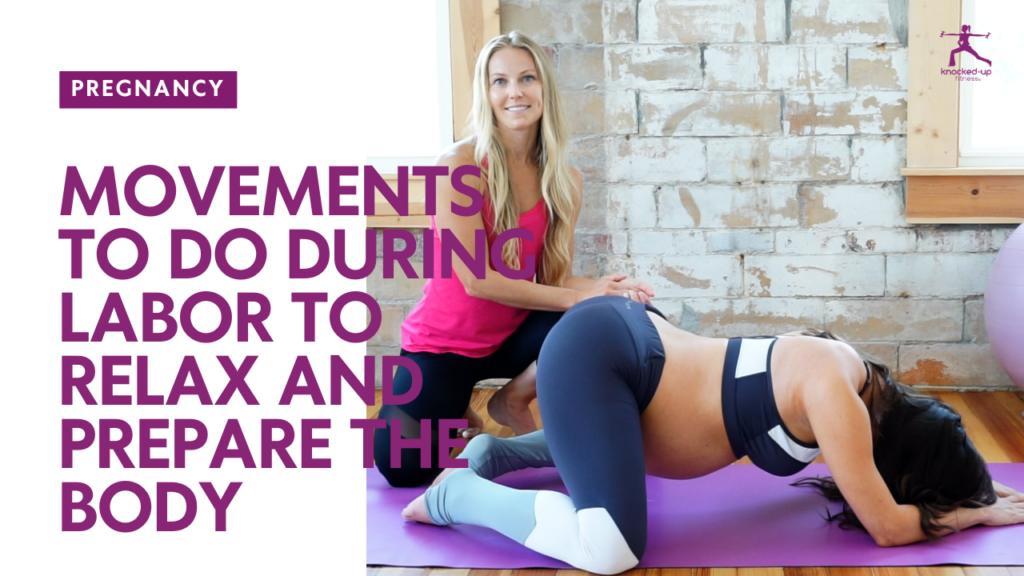
3. Hands-and-Knees (Quadruped) Positions
This position is often one of the most relieving positions during labor. Benefits include:
- Reduces pressure on the low back
- Encourages optimal baby positioning
- Allows for gentle movement and shifting
You can add:
- Rocking forward and back
- Small circles through the hips
- Cat cows
- Smaller range arch and rounds
- Belly release exercises with your forearms up on a ball
Again, we’re focusing on movement that feels supportive, not forced.
4. Breath-Led Movement
Breath is one of your most powerful tools during labor. Instead of holding your breath or bracing, focus on:
- Expanding through the ribs (360° breath) – breathing out laterally into the rib cage and low back (not just chest or shoulder breathing, but getting deep into the diaphragm)
- Allowing a gentle, relaxing, coordinated exhale
This helps:
- Reduce tension
- Support the pelvic floor
- Regulate the nervous system
-
Prepares your body for the pushing phase of labor
This is something we emphasize often across both the Knocked-Up Fitness blog and EricaZiel.com — because breath influences everything. And we teach how to breathe correctly for delivery with our Push Prep Method. 
5. Walking and Upright Positions
When possible, staying upright can be very helpful. This includes:
- Walking slowly
- Standing and swaying
- Leaning forward onto a surface (you can do standing cat cows or arch & rounds here)
- Body rotations with a smaller range of motion
Benefits:
- Encourages progress in labor
- Keeps the pelvis dynamic
- Helps you stay connected to your body
Even short periods of upright movement can make a difference.
What to Avoid: Over-Stretching and Forcing Positions
Just like we discussed in our previous blog on stretching too much during pregnancy, more range is not always better. During labor, avoid:
- Forcing deep stretches
- Holding positions that feel unstable
- Pushing into discomfort unnecessarily
Your body will guide you when you stay connected and aware.
The Bottom Line
Labor is not about doing everything perfectly. It’s about:
- Staying connected to your body
- Using movement to support, not force
- Allowing your body to work with you
Simple, supported movement can help you feel more capable, more grounded, and more prepared.
Want to Feel More Prepared for Labor?
Inside the Knocked-Up Fitness® program, we teach you how to move throughout pregnancy in a way that prepares your body for labor, delivery, and recovery.
If you work with pregnant women — or want to deepen your understanding for your own body — our Prenatal and Postnatal Exercise Specialist course provides a deeper dive into:
- Movement during pregnancy
- Pelvic floor and core connection
- Fascia-based training
- Supporting clients through each stage
You don’t have to guess what your body needs.
The right knowledge changes everything.
Your body already knows how to do this – the right movement simply helps support it.